
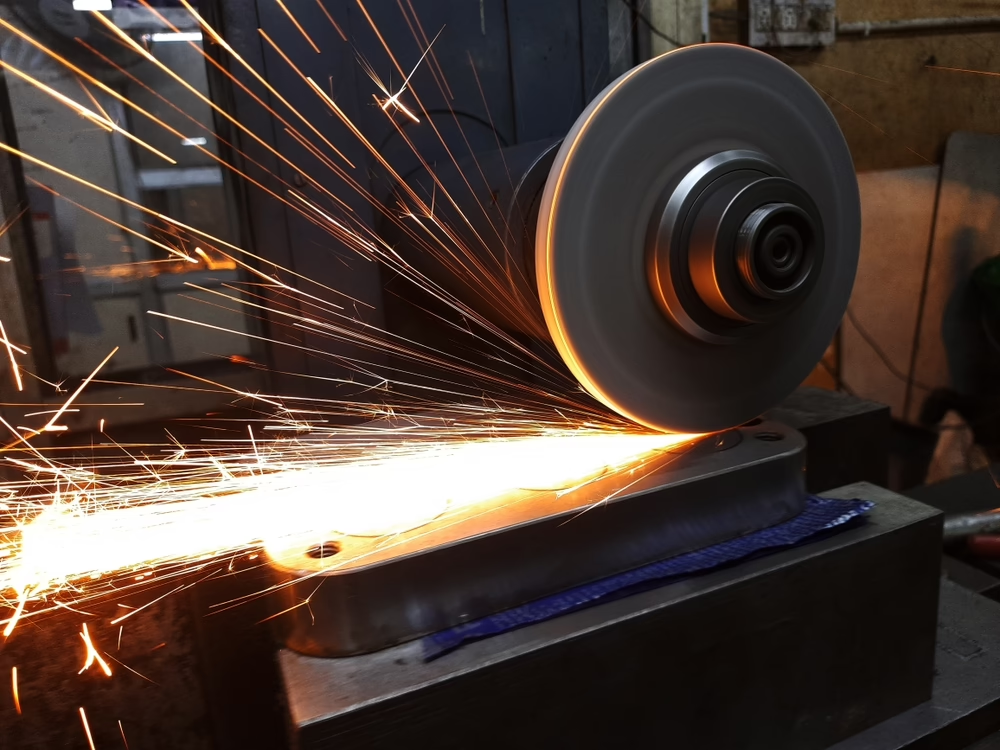
Precision is critical in modern manufacturing. Small dimensional deviations can result in rejected parts, costly rework, or scrap. Understanding how a surface grinding machine works is essential for achieving perfectly flat, smooth surfaces on machined components. These specialized tools utilize high-speed rotation to deliver the exact tolerances required for industrial applications.
How exactly does a surface grinding machine work to deliver such tight tolerances for modern manufacturing? This guide explains the mechanics behind the machine, the essential components, and the step-by-step process machining specialists use daily. You will learn how these powerful tools turn rough steel blocks into highly accurate finished parts.
A surface grinder operates on a few fundamental mechanical principles of precision machining. The machine relies on an abrasive wheel spinning at high speeds to remove tiny amounts of material from a workpiece. The basic setup includes a grinding wheel, a workholding device, and a sturdy cast-iron base to absorb heavy vibrations.
Each individual component plays a specific role in creating the final mirrored finish on the metal during the process. The heavy base provides the rigidity needed to prevent chatter marks during the high-speed cutting operation. Surface grinding often works best with magnetic metals as you can use a magnetic chuck to hold down each part, making sure that a part does not have any chatter or abrasions during this process.
The Abrasive Grinding Wheel and Spindle
The grinding wheel acts as the primary cutting tool for the entire precision machining operation. It consists of thousands of abrasive particles bound together by a specialized resin or vitrified matrix. Common wheel materials include aluminum oxide for standard steel and diamond for much harder metal alloys. At Cer-Mac Inc., their specialized grinding processes incorporate these advanced abrasive technologies to make sure that even the most challenging materials conform to exact dimensional prints.
Cer-Mac often uses Borizon wheels during our production processes. Borizon (CBN) grinding wheels offer extreme hardness and exceptional shape retention, allowing them to outlast conventional wheels while maintaining high precision. They also feature superior thermal conductivity, which pulls heat away from the workpiece to prevent burning, warping, and lost temper in hardened steels.
The wheel rotates rapidly, usually spinning between 1,500 and 3,000 revolutions per minute on a motorized spindle. As the wheel contacts the metal, the sharp edges of the abrasive grains shear off microscopic chips. Selecting the correct wheel grade prevents thermal damage to the workpiece.
The Reciprocating Worktable and Magnetic Chuck Workholding
You cannot grind a part accurately if it moves during the cutting process, so stability is vital. The reciprocating worktable holds the material securely in place while the grinding wheel passes over it repeatedly. Most industrial machines use an electromagnetic chuck mounted directly to this moving table.
The operator places the ferrous metal part on the chuck and activates a strong magnetic field to lock it down. The table then moves back and forth under the spinning wheel at a controlled speed. For non-magnetic materials like aluminum, machinists use specialized mechanical vises or vacuum chucks to hold the parts.
How Surface Grinding Actually Happens in Abrasive Machining
The actual operation requires careful preparation and strict attention to detail from the professional operator. Machinists do not just throw a piece of metal on the machine and press a start button. They follow a strict sequence of events to achieve the desired finish and dimensional accuracy.
As part of their suite of precision manufacturing capabilities, Cer-Mac Inc. provides expert surface grinding machining to deliver exceptional flat and parallel finishes. Operators typically spend years mastering the subtle nuances of these manual and CNC controls. They learn to listen to the sound of the spindle and watch the spark trail to gauge the cutting efficiency. The following sequence outlines the standard procedure for grinding a flat steel block.
How to Operate an Industrial Surface Grinder
- Prepare and Mount the Workpiece: Clean the magnetic chuck thoroughly with a specialized stone before placing your metal part flat on the surface. Activate the magnet and physically test the holding force.
- Dress the Grinding Wheel: Use a diamond dressing tool to expose fresh, sharp abrasive grains on the wheel. This step makes the wheel perfectly round and parallel to the worktable.
- Execute the Grinding Passes: Lower the spinning wheel until it just touches the highest point of the part. Engage the automatic table feed and lower the wheel slightly after each full pass.
After completing those initial steps, the operator must carefully monitor the machine during the entire cycle. The grinding wheel generates an enormous amount of friction and heat while cutting the metal. If the metal gets too hot, it can warp dramatically or lose its structural integrity completely.
Operators flood the work area with a specialized cutting fluid to keep temperatures down during the process. This coolant also washes away the tiny metal chips and broken abrasive grains from the cutting zone. Without proper lubrication, the wheel would quickly clog up with debris and stop cutting effectively.
Industrial Configurations: Different Types of Surface Grinding Machines
Manufacturers use several variations of the standard surface grinder depending on their specific production needs. The orientation of the main spindle and the movement of the table define the machine type. Horizontal and OD setups represent the two most common configurations found in machine shops today.
Horizontal Spindle Grinders
A horizontal spindle grinder features a wheel that mounts parallel to the worktable for precision work. The periphery, or the outside edge of the wheel, performs the actual cutting action on the metal. This setup works exceptionally well for high-precision work on flat surfaces, angled slots, and complex profiles.
Operators typically use these machines for delicate tool and die making where accuracy remains paramount. The horizontal configuration allows for a much smaller contact area between the wheel and the part. This small contact patch generates less heat, making it easier to hold very tight dimensional tolerances.
OD Grinders
An Outside Diameter (OD) grinding machine, also known as a cylindrical grinder, specializes in finishing the exterior surfaces of rotating, symmetrical parts like shafts, axles, and pistons by holding the workpiece between centers or in a chuck. In contrast, a horizontal surface grinder is designed to finish flat, planar surfaces by securing a stationary workpiece to a reciprocating magnetic chuck that passes underneath a horizontal grinding wheel. OD grinders manipulate the workpiece through rotation to achieve perfect concentricity.
Operator Safety Protocols: Important Safety Rules for Metal Finishing Equipment
Running a surface grinder involves inherent risks that demand strict safety protocols from every operator. The combination of high-speed rotation, heavy metal parts, and powerful electromagnets creates a potentially hazardous environment. Operators must respect the machinery and follow established safety guidelines to prevent catastrophic shop accidents.
Before turning on the spindle, a machinist should perform a visual inspection of the entire setup. They look for hairline cracks in the abrasive wheel using a simple acoustic ring test. Tapping a solid wheel with a non-metallic tool produces a clear ringing sound, while a dull thud indicates a dangerous crack.
Personal protective equipment also plays a non-negotiable role in daily grinding operations. Safety glasses with side shields protect the eyes from stray sparks and flying abrasive debris. Safety guidelines published by the Occupational Safety and Health Administration (OSHA) mandate specific guarding requirements for all abrasive wheel machinery.
Troubleshooting Common Surface Grinding Defects
Even with a perfect setup, operators occasionally encounter issues that ruin a machined part. Chatter marks and surface burns rank as the most frequent problems in any industrial grinding department. Chatter appears as a series of wavy lines across the finished metal, which usually stems from excessive machine vibration.
What happens when the grinding wheel generates too much friction during the cutting process? When the metal turns blue or brown, it means the wheel generated too much heat during the pass. A burned surface becomes structurally weak and fails quality inspection immediately. Cer-Mac Inc.’s ISO 9001:2015 certified quality systems avoid these common pitfalls through rigorous operational testing and in-process auditing.
To resolve burning issues, machinists must adjust their programmed speeds and feeds manually. They might increase the table speed to reduce the contact time, or switch to a softer abrasive grade. You must diagnose these visual defects quickly to avoid scrapping expensive raw materials.
Common Applications in Modern Manufacturing
Surface grinding supports almost every major industrial sector operating in the United States today. By providing the foundational accuracy that basic manufacturing processes simply cannot achieve, it delivers the ultra-precise components required for modern transportation, energy production, and high-tech infrastructure.
Here is how key industries rely on this critical process:
- Aerospace: Jet engine parts and critical turbine components require perfectly flat mating surfaces to maintain proper compression at extreme altitudes. Even a microscopic gap between two metal flanges can lead to catastrophic engine failure during flight.
- Automotive: Manufacturers use automated grinding centers to finish high-stress parts like engine blocks, cylinder heads, and intricate transmission components that demand tight seals and frictionless movement.
- Tool & Die: Traditional and custom tool-and-die shops across the country rely on grinding processes to create perfectly parallel and square blocks of steel, making the surface grinder an indispensable foundational tool.
Multi-Industry Production Expertise
Leveraging decades of diverse industry expertise, Cer-Mac Inc. routinely manufactures these types of complex components. By combining CNC turning, milling, and surface grinding, Cer-Mac Inc. delivers specialized, high-tolerance parts designed for the rigorous demands of sectors ranging from oil and gas to medical and aerospace.
Partner with the Precision Experts
Grinding represents the absolute pinnacle of precision machining. Surface grinding machines are able to make rough, uneven steel into mirror-like components essential for advanced manufacturing and engineering. By understanding how the abrasive wheels, magnetic chucks, and coolant systems work together, you can better appreciate this complex process.
When your industrial applications demand tight tolerances, near total flatness, and flawless surface finishes, you need a manufacturing partner you can trust. Cer-Mac Inc. combines state-of-the-art technology with decades of machining expertise to deliver precise components that meet your exact specifications.
Contact Cer-Mac Inc. today to discuss your project requirements or request a custom quote!